

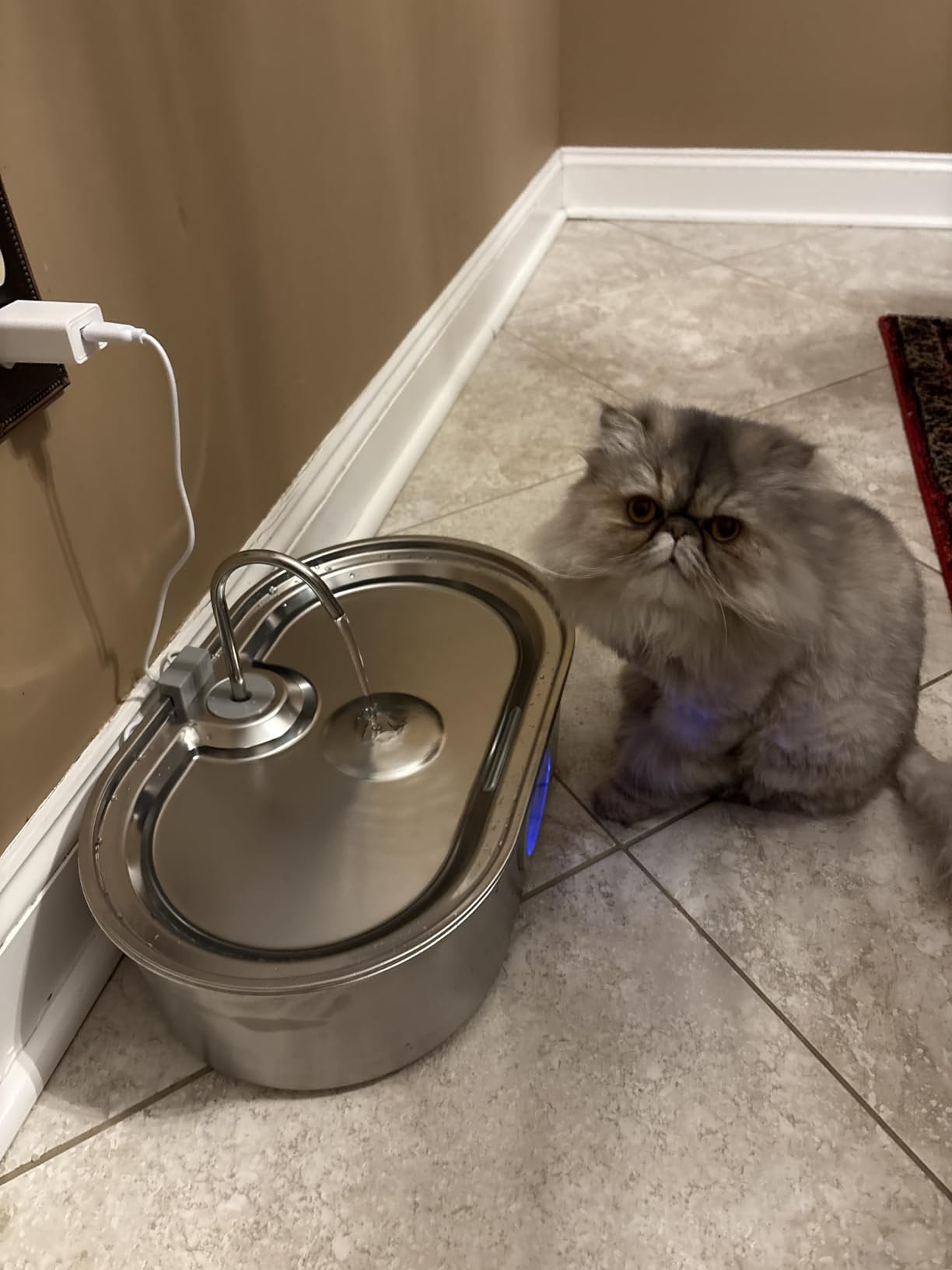
Cat Water Fountains encourage hydration by offering running, filtered water that appeals to feline instincts. This guide covers how moving water helps cats, how to choose the best Cat Water Fountains, why stainless steel models matter, filter types and maintenance, and a practical review and buying guide for Petlibro Cat Water Fountains so you can choose a safe, durable, low-maintenance solution.
Why Cat Water Fountains appeal to cats and their health benefits
Feline hydration physiology
Cats are obligate carnivores and evolved from ancestors that obtained most moisture from prey, so their thirsty drive is lower than omnivores. Their kidneys are highly efficient at conserving water and producing concentrated urine, which was an advantage in arid environments but makes domestic cats prone to low voluntary water intake. Insufficient drinking increases risk of urinary tract disease (including feline lower urinary tract disease, FLUTD) and long‑term kidney stress such as chronic kidney disease. These are well‑documented concerns; increasing fluid intake is one of the few non‑pharmaceutical measures that helps reduce urinary crystal formation and supports renal health. Consult veterinary resources for specific medical advice.
Behavioral cues
Many cats show a clear preference for running water. Moving water signals freshness and lowers the chance of bacterial growth or contamination; cats are also sensitive to subtle tastes and smells that make stagnant bowls unappealing. Additionally, many cats dislike drinking from surfaces that smell of food or litter, and they can reject bowls that retain odors or have plastic tastes. A gentle stream or bubbler often triggers drinking behavior where a still bowl does not.
Practical implications for owners
*Signs of dehydration:* reduced skin elasticity, dry or tacky gums, sunken eyes, decreased appetite, lethargy—seek veterinary care if present.
*How fountains help:* water fountains for cats increase drinking frequency by offering continuous, aerated, and often cooler water; many owners and studies report higher daily intake when cats use fountains versus bowls.
*Tips to encourage sipping:*
– Place the fountain away from the litter box and, if your cat prefers, away from feeding stations.
– Provide multiple drinking stations in multi‑cat homes.
– Choose a gentle flow and quieter pump; experiment with stream style.
– Keep water cool, clean and change or filter regularly; use materials (like stainless steel) that don’t hold odors.
For medical concerns or persistent low intake, consult your veterinarian or accredited veterinary resources to rule out underlying disease.
Choosing the best cat water fountains features to prioritize
Core features to compare
- Capacity: Choose based on cat(s) and refill frequency — larger reservoirs suit multi-cat homes and travel, smaller bowls reduce stale water in single-cat households. Capacity affects how often you clean and top up.
- Pump type and reliability: Submersible vs. external pumps; ceramic-impeller vs. magnetic rotor designs. A reliable, replaceable pump prevents dry-running failure and bacterial growth. Look for warranties and easy-to-find replacements.
- Flow styles (stream, bubbler, waterfall): Cats show individual preferences — some prefer a steady stream, others a gentle waterfall or bubbler. Flow affects oxygenation, splash, and accessibility for shy drinkers.
- Noise level: Measured in dB — quieter pumps encourage use and suit apartment living. Verify exact pump noise from manufacturer specs and customer reviews; perceived noise often differs from rated dB.
- Energy use: Low-watt pumps reduce running costs; USB-powered units draw less than mains models. Consider 24/7 runtime when comparing energy use.
- Safety: Auto shut-off for low water, non-slip bases, cord management, and BPA-free materials matter for pet safety and owner peace of mind.
Materials and finish considerations
- Stainless steel: (See dedicated chapter) generally resists tastes and stains; check grade and finish.
- Plastic: Lightweight and affordable but may retain odors/scratches; prefer BPA-free, food-grade plastics.
- Ceramic: Heavy, attractive, and inert but can chip; glazed surfaces resist bacteria if intact.
Maintenance and cleaning
- Prefer models with easy disassembly, few crevices, and dishwasher-safe parts. Frequent cleaning (weekly) prevents biofilm; user-friendly designs reduce long-term hassle.
- Replaceable filters and accessible pump housings simplify upkeep.
User scenarios
- Single-cat home: Medium capacity, quiet pump, easy-clean removable parts.
- Multi-cat household: Larger capacity, sturdy materials, high-flow options, multiple drinking points.
- Apartment living: Ultra-quiet pump, compact footprint, non-splash designs.
- Travel / power outages: Battery-backed or USB-powerable fountains, or models that allow manual-fill reservoirs.
Buying checklist
- Must-haves: Reliable replaceable pump, easy disassembly, safe material (BPA-free/food-grade), anti-slip base, clear noise spec.
- Nice-to-haves: Dishwasher-safe parts, multiple flow styles, spare filters/pump included, battery/USB power option.
Always verify pump noise and flow rates from manufacturer specifications and customer reviews before purchasing the best cat water fountain or water fountain for cats for your situation.
Stainless Steel Cat Water Fountains: Advantages and What to Check
Stainless steel properties: Stainless steel is an iron‑based alloy known for *corrosion resistance* and a smooth, non‑porous surface that resists staining and chemical attack. Those attributes make it widely used where hygiene and cleanability matter — kitchens, medical devices and foodservice equipment — and they matter equally for a *cat water fountain stainless steel* basin and spout.
Hygiene and health: A non‑porous stainless surface inhibits trapping organic residues the way some plastics can, so it is less likely to retain odors or support persistent biofilm. That reduces sites where bacteria and algae can colonize, which helps keep water taste neutral and lowers microbial risk between cleanings. For cats that turn up their noses at plastic taste, a stainless model often ranks among the *best cat water fountain* choices for palatability.
Durability and longevity: Stainless steel resists corrosion (especially food‑grade alloys) and stands up well to mechanical wear. Practical benefits: bowls don’t warp, chips don’t flake into the water, and heavy construction resists tipping by enthusiastic drinkers. Trade‑offs: stainless fountains are typically heavier and costlier than plastic. The extra weight is an advantage for stability but makes the unit less portable.
Grades and finishes: Most pet products use 304 (18/8) stainless; some high‑end units specify 316 (marine grade). Verify alloy and certifications on the product data sheet. Finish matters: *mirror* or highly polished surfaces are easiest to wipe clean but show scratches; *brushed* finishes hide wear and often hide fingerprints while remaining easy to maintain.
Cleaning and maintenance: Recommended routine: daily water refresh and rinse; weekly full disassembly and wash with warm soapy water; monthly inspection for scratches or pitting. Many stainless bowls are dishwasher‑safe, but confirm for the whole fountain (pump and seals often are not). Use mild detergent, white vinegar for scale, or baking soda paste for spots. Avoid steel wool and chlorine/bleach solutions that can pit stainless or leave chloride residues. Inspect edges, seams and any scratched areas — deep scratches or pitting can harbor bacteria and indicate replacement.
When stainless steel is the best choice: Ideal for multi‑cat households, allergy/proness to plastic taste, heavy‑use settings and owners wanting low‑odor, long‑lasting units. If cost or portability is the priority, well‑made ceramic or high‑grade BPA‑free plastics can be acceptable — but always check material specs and certifications. Always review manufacturer data sheets for grade, food‑safety certifications and finish before choosing a water fountain for cats.
Cat Water Fountain Filters: Maintenance and Keeping Water Clean
Types of filters and what they remove: activated carbon — adsorbs chlorine, volatile organics and some odors/taste compounds; foam/sponge — mechanical pre-filter for hair, debris and larger particles; mechanical mesh — captures fine particles and sediment; ion‑exchange/mineral cartridges — marketed to reduce hardness or add minerals and sometimes target specific ions or heavy metals. Note: specific removal claims (heavy metals, microbial removal) often require laboratory certification (e.g., NSF/ANSI ratings) or manufacturer validation — always cross‑check documentation and third‑party reviews before relying on claims.
How filters affect taste and microbial risk: Filters that remove chlorine and organics usually improve smell and taste, encouraging cats to drink. Conversely, old or saturated filters trap organics and become breeding grounds for bacteria and biofilm, which can produce odors, reduce flow and increase microbial risk. Regular replacement prevents buildup and maintains both taste and hygiene. Typical replacement intervals vary by filter type and usage — commonly every 2–8 weeks — but follow the manufacturer’s guidance rather than fixed dates.
Practical maintenance routine (checklist):
- Daily: Refill water, check level, wipe edges and spout, listen for unusual pump noise.
- Weekly: Rinse foam/sponge and mesh pre‑filter, empty and wash reservoir and lid with mild soap or vinegar solution, inspect and clean pump inlet and impeller.
- Monthly (or per manufacturer): Replace carbon/mineral cartridges as recommended, deep‑clean all parts (vinegar 1:3 water or pet-safe cleaner), inspect seals and tubing for wear.
Filter disposal and cost considerations: Estimate annual cost = (price per filter) × (filters per year). Buying multipacks reduces per‑unit cost. Confirm compatibility by SKU/model number, physical dimensions and attachment style; check seller listings and manufacturer pages.
Troubleshooting (quick list):
- Reduced flow — clean/replace pre‑filter, clean impeller, check water level.
- Bad smell — replace carbon filter, deep‑clean reservoir.
- Pump noise/vibration — clean impeller, reseat pump; replace if noisy after cleaning.
- Algae — clean and keep fountain out of direct sun; replace filters more often.
- Persistent contamination — stop use and consult manufacturer; replace pump or parts if cleaning fails.
Cross‑check filtration claims with manufacturer documentation and independent reviews to verify effectiveness of your cat water fountain filters and ensure a safe water fountain for cats.
Petlibro Cat Water Fountains: Models Comparison and Buyer Guide
Overview of the brand and typical product features
Petlibro water fountain products focus on budget-friendly, user-serviceable fountains aimed at cat owners who want a continuous-flow solution. Across models you’ll commonly find circulating pumps (replaceable), modular bowls made from BPA-free plastic or stainless steel in some variants, multiple capacity options aimed at single- or multi-cat homes, and proprietary replaceable filter cartridges sold in multi-packs. Verified specifics (capacities, materials, pump models) change by SKU and regional listing; confirm current specs on the Petlibro product page or retailer listing before buying.
Model comparisons by use case (names omitted unless verified)
- Single cat / small households — pros: compact footprint, lower water capacity means fresh changes, lower noise and energy use. cons: need more frequent refill, smaller bowl can spatter.
- Multi-cat / high-demand — pros: larger reservoirs (3–5L equivalents) reduce refill frequency, multiple drinking surfaces. cons: heavier cleaning burden, filters used up faster.
- Quiet households — pros: Petlibro advertises “quiet” pumps on many SKUs; look for noise dB spec. cons: aging pumps can still get louder — maintenance matters.
- Stainless steel preference — pros: stainless bowls resist biofilm and odors; some Petlibro variants or aftermarket bowls are stainless compatible. cons: not all SKUs include stainless; verify before purchase.
Price and value considerations
- Typical new-unit price ranges (general market): budget fountains to mid-range—confirm current MSRP on retailer pages.
- Recurring filter costs: replacement filter packs are the primary ongoing cost; check SKU and pack size to calculate annual running cost.
- Warranty & support: check Petlibro warranty length on the product page and read recent customer-support reviews; keep receipts and register product if offered.
Practical buying advice
- Match capacity to drinking habits and number of cats.
- On product pages verify: material (plastic vs stainless), replacement filter SKU, pump noise (dB if listed), power type (USB/adapter), and parts availability.
- Interpret user reviews for long-term pump reliability and real-world noise; weigh verified photos/videos higher than single-sentence ratings.
- Confirm current specs and stock before purchase and consult seller return policies and warranties.
Alternatives
- For true stainless-steel units or ultra-quiet pumps, consider specialist brands with verified stainless bowls or brushless pumps.
- If simplicity matters, gravity-fed dishes eliminate pumps and complex filters at the expense of circulation.
Conclusions
Choosing the right Cat Water Fountains balances material, filtration, noise, and maintenance to keep your cat hydrated and healthy. Stainless steel offers superior cleanability and durability. Effective filters and regular cleaning maintain water quality. Petlibro models can be solid choices when matched to your cat’s habits. Use these guidelines to pick and maintain a fountain that supports feline hydration.
See Pet Products Review Here.